



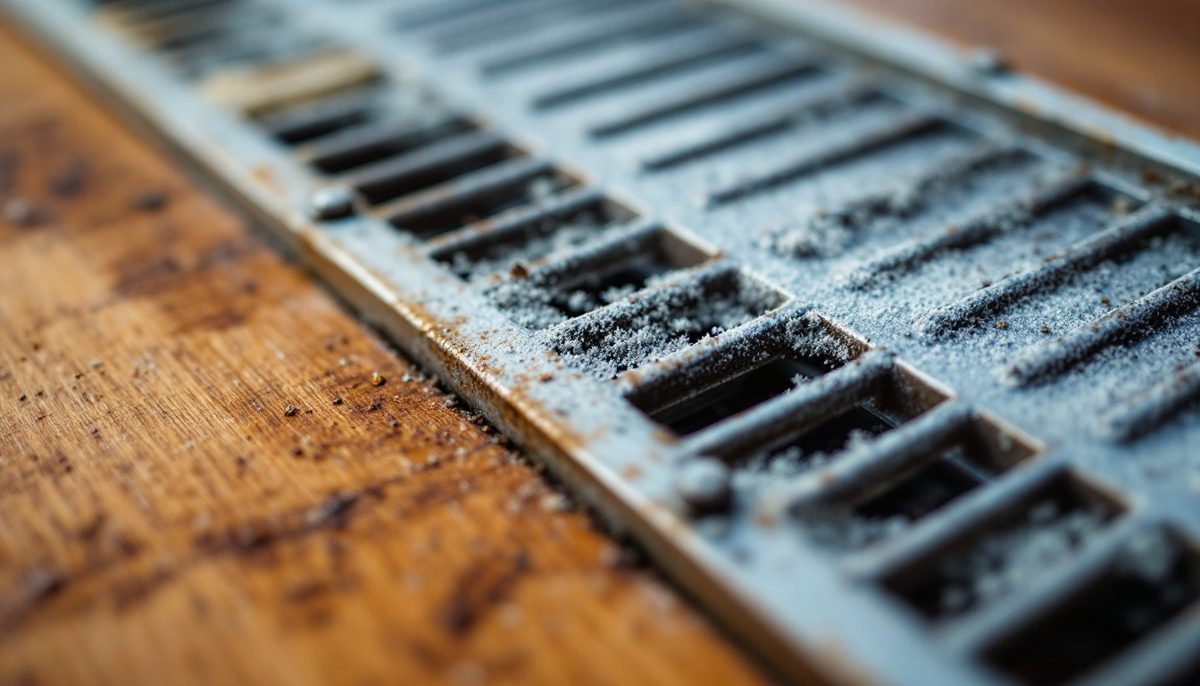
Why Does My Furnace Smell Like Burning?
If your furnace smells like burning, the most likely cause is dust. A furnace that sat idle all summer collects a thin layer of it on the burners and heat exchanger, and the first real heat of the fall cooks it off. That odour usually fades within a few hours of steady running. A burning smell that keeps coming back, or one that reminds you of hot plastic or wiring, is a different story, because it usually means a part is overheating.
Why Your Furnace Smells Like Burning: The Short Answer
Most of the time the cause is harmless. Dust settles inside the cabinet over the warm months, and when the burners light for the first time in September or October, it scorches off and travels through the ductwork to every register in the house. Calgary’s dry air carries plenty of fine dust, so that first run is often stronger than people expect.
The smell becomes a concern when it is still there the next day, returns every time the furnace starts, or changes character, because any of those points to a fault. A sharp chemical smell of burning plastic, a hot electrical odour or any visible smoke means you should stop running the furnace until someone looks at it.
Name the Smell Before You Do Anything Else
Different problems produce different odours, so describe what you notice. Note whether it is strongest at the unit or at the registers, and whether it starts when the burners light or when the blower kicks on. Those two details tell an HVAC technician a lot.
Burning Dust on the First Cold Day
Burning dust has a dry, toasty odour, like a toaster nobody has cleaned in a while. It also returns whenever the furnace has sat off for a long stretch. Open a window and let the system run through a couple of full cycles, and it should clear within a few hours. If it is still there the next day, a cleaning is worth booking.
A Burning Smell That Comes Back Every Time the Heat Runs
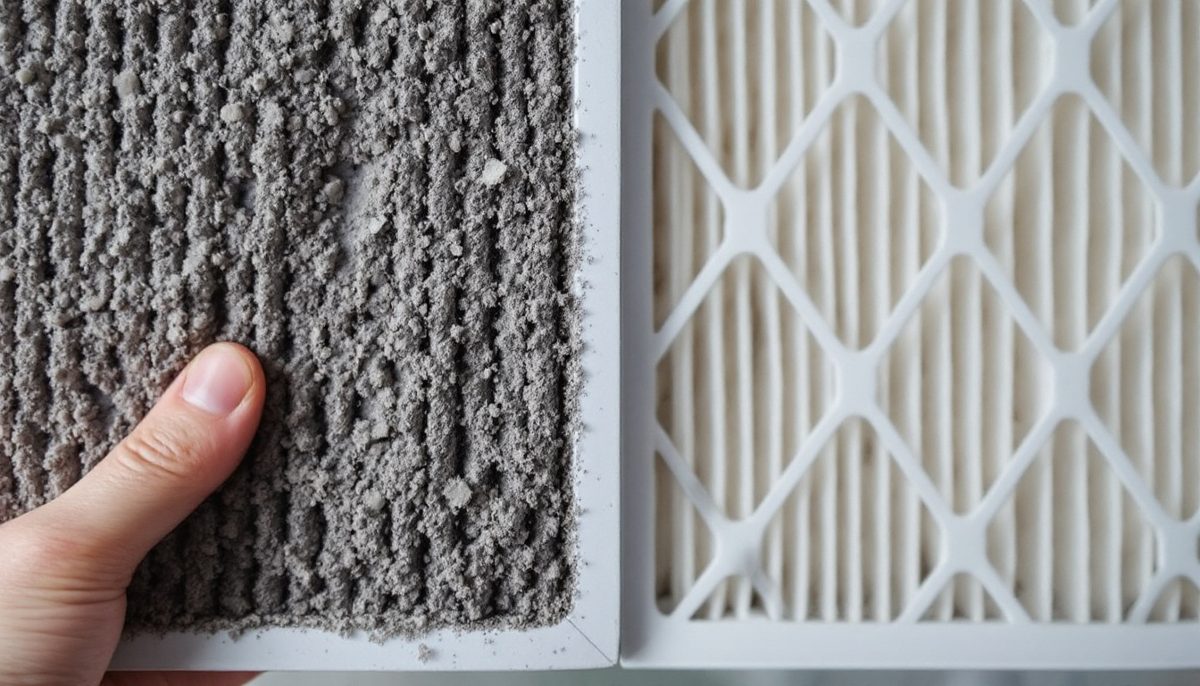
When the smell returns on every cycle, something is getting hotter than it should. The usual cause is a clogged air filter. A filter packed with dust and pet hair chokes the airflow, so the heat exchanger runs hotter than designed and any dust that slips past the filter scorches on the hot metal. Eventually the high limit switch trips and shuts the burners off to protect the furnace, which is why an overheating unit often short cycles as well.
Closing a lot of registers or blocking a cold air return does the same thing, since they also starve the furnace of air. Something that has fallen through a floor register, such as a crayon or a plastic toy, can soften in the warm supply air and give off a plastic smell. Check the filter first, then shine a flashlight down the floor registers.
Burning Plastic or a Hot Electrical Odour
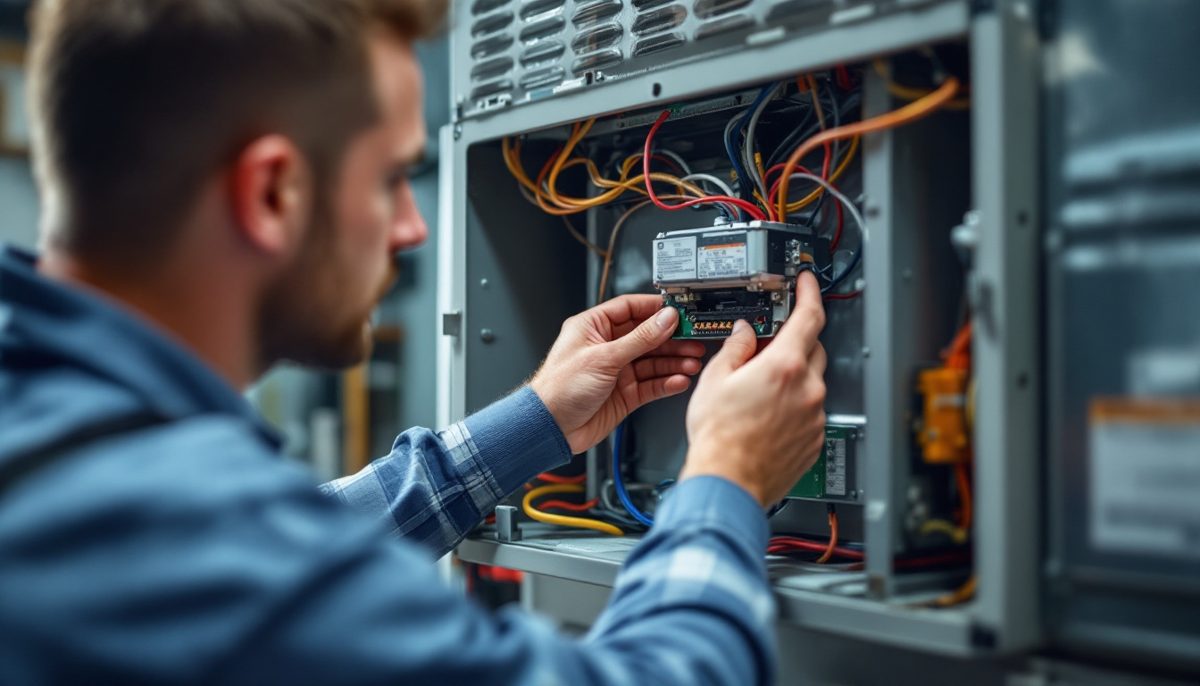
A burning plastic smell, or the acrid odour of hot wiring, is the one you should never wait out. It can come from insulation melting on a loose or overloaded wire, a failing control board, or a relay that has started to arc. Since this kind of fault can start a fire, switch the furnace off and call for HVAC service right away. Even a faint fishy smell near the furnace can be the early stage of the same fault.
A Smoky, Gunpowder Odour From the Blower Motor
Spent fireworks or gunpowder usually points to an overheated blower motor or a burned-out component on the circuit board. As a blower motor ages, its bearings wear and it draws more current, and a clogged filter speeds that up. Turn the furnace off and have the motor tested, since an overheating motor rarely fixes itself.
Burning Oil From an Older Oil Furnace
Oil furnaces are rare in Calgary, where nearly every home heats with natural gas, but a few older rural homes still have them. A faint oily smell at startup can simply be residue on the burner. If it is strong or lasting, though, it can mean a clogged oil filter, a leak or a burner that needs adjustment, so call a technician.
Rotten Eggs Means Gas, Not Burning
People sometimes describe a gas leak as a burning smell, but natural gas smells like rotten eggs or sulphur because the utility adds an odorant to it. If that is what you notice, do not touch light switches, the thermostat or the garage door opener and do not try to relight anything. Get everyone out of the house, then call the ATCO emergency line at 1-800-511-3447 or 911 from outside.
Musty or Dirty-Sock Odours
A damp, musty smell when the heat comes on usually means mould or bacteria growing somewhere with moisture, such as the evaporator coil above the furnace, a humidifier pad, a condensate drain or the ductwork itself. A fresh filter and a cleaned coil or humidifier often solve it, and if you notice the same thing in summer, our page on why an AC smells bad covers the cooling side.
What to Do When Your Furnace Smells Like Burning
- If it smells like rotten eggs, skip this list and follow the gas steps above: leave the house and call ATCO from outside.
- If you see smoke or flames, leave the house and call 911.
- Turn the thermostat down or off so the burners stop calling for heat.
- If the smell is plastic, electrical or smoky, shut the furnace off at the service switch beside the cabinet, or at the breaker.
- Open a couple of windows and run the bathroom fans.
- With the power off, check the air filter and replace it if it looks grey or clogged.
- Look down the floor registers for anything that may have fallen in.
If it was only dust and it clears after a filter change, turn the thermostat back up and keep an eye on it. For anything else, leave the furnace off and book furnace repair so an HVAC technician can find the source before it runs again.
Is It Safe to Run a Furnace if It Smells?
A faint dusty smell that fades within a few hours is usually safe to run through. Running a furnace that gives off burning plastic, hot wiring or gas is not, and neither is one that produces a burning smell cycle after cycle. In those cases a part is too hot, and running it longer can turn a small repair into a bigger one.
Keep in mind that the gas you should worry about most has no smell at all. Carbon monoxide is colourless and odourless. It forms when gas burns incompletely, and a cracked heat exchanger or blocked vent is what lets it into the living space. A working CO alarm on every floor, including near the bedrooms, covers that gap, and if one sounds, get everyone outside and call 911. Our article on whether an old furnace can cause carbon monoxide explains how an ageing unit produces it.
Is It Normal to Smell Burning the First Time Your Furnace Is On?
Yes, it is normal to smell burning the first time your furnace comes on for the season. The seasonal smell is dust, and it clears within a few hours of steady running. After a new furnace installation, the unit smells different for a few days while factory oils and coatings bake off, and our page on whether it is normal for a new furnace to smell explains that break-in period.
Why Does It Smell Like Something Is Burning in My House but Nothing Is Burning?
A burning smell with no obvious source often comes from somewhere other than the furnace. Dust on baseboard heaters and space heaters burns off the same way, a dryer with a lint-packed vent smells scorched, and a warm outlet can smell faintly electrical. During wildfire season, outside smoke also comes in through fresh-air intakes and the HRV, and plenty of homeowners mistake it for a furnace problem.
Unplug any appliance near the smell and feel outlets and switch plates for warmth. If it starts when the furnace comes on and fades when it shuts off, the furnace is the likely source after all. When nobody else in the house can smell it, mention it to your doctor, since a phantom burning smell has medical causes too.
What Are the Signs of a Dying Furnace?
A furnace near the end of its life tends to show several signs at once. Recurring burning smells are one, especially when the same part keeps overheating. Others include repairs every winter, gas bills that climb while your habits stay the same, rooms that never quite warm up, a yellow or flickering burner flame instead of a steady blue one, and soot or rust around the cabinet.
Age matters as well. Most furnaces in local homes last around 15 to 20 years, as our article on how long a furnace lasts explains. When a unit that old keeps needing repairs, it is worth pricing a furnace replacement alongside the repair quote, although plenty of older furnaces only need a new part.
How to Keep a Burning Smell From Coming Back
Most burning odours trace back to dust, airflow or wear, all of which respond to basic upkeep. Change the air filter every one to three months during the heating season, and more often with pets or renovation dust (our guide on how often to change a furnace filter covers timing). Keep registers open and furniture off the return grilles so the system can breathe.
Annual furnace maintenance covers the rest. A tune-up generally includes cleaning the burners and blower compartment, checking the motor, tightening electrical connections and looking over the heat exchanger, which catches many worn components before they get hot enough to smell.
Getting a Burning Smell Checked in Calgary
If the filter check did not fix it, call Calgary Air Heating and Cooling Ltd at (403) 720-0003. Our service call is $149, and through the heating season we take after-hours calls in the evenings and on weekends. We serve Calgary, Chestermere, Cochrane and Okotoks, and we will tell you plainly whether it needs a repair or only a cleaning.
Frequently Asked Questions
Can a dirty filter make a furnace smell like burning?
Yes, a dirty filter can make a furnace smell like burning. It restricts airflow, so the furnace runs hotter than it should. Replacing it often clears the problem within a few cycles.