



Can a Furnace Heat Exchanger Be Repaired?
No, not in a way any licensed technician will stand behind. When people ask whether a furnace heat exchanger can be repaired, they nearly always mean a cracked one, and that gets fixed by replacing the heat exchanger or the whole furnace, never by welding or sealing the metal. What you still get to decide is which of those two replacements makes sense, and that comes down to the age of the unit, the warranty, and the condition of every other component in the cabinet.
Can a Heat Exchanger Be Repaired? The Short Answer
A cracked heat exchanger gets replaced, either alone or along with the furnace. It is the set of metal tubes or chambers between the burners and the blower. Hot combustion gases travel through the inside while house air blows across the outside, and the wall between them passes the heat along while keeping the two streams apart. A mid-efficiency furnace has one heat exchanger, while a high-efficiency condensing model (90% AFUE and up) has a primary and a secondary one.
That wall works as a seal as much as a heater, so a crack is a safety problem before it is a comfort problem. Most other faults are ordinary fixes, though, and our furnace repair service handles igniters, gas valves and motors all through the heating season.
Why Welding or Sealing a Cracked Heat Exchanger Is Not a Fix
Welding the split shut or coating it in high-temperature sealant won’t hold. A residential heat exchanger is thin, coated steel that expands and contracts thousands of times a winter, and that movement is what opened the gap in the first place. Any weld leaves a hard, brittle spot beside steel that is already fatigued, so the next failure usually starts right next to it, while a sealant simply bakes off.
The furnace is also safety-certified as a complete appliance, and a patched heat exchanger is no longer the part that went through testing. No manufacturer will warranty that patch, and a licensed gas fitter in Alberta has no basis for signing off on it. So heat exchanger repair on an invoice or in an ad should mean a new heat exchanger going in.
Signs of a Bad Heat Exchanger in a Furnace
The usual signs are rising carbon monoxide readings, soot, yellow or unsteady flames, a sharp smell at start-up, rust and short cycling, though each has other possible causes, so none proves a crack on its own. Here is what we watch for, roughly from most to least telling:
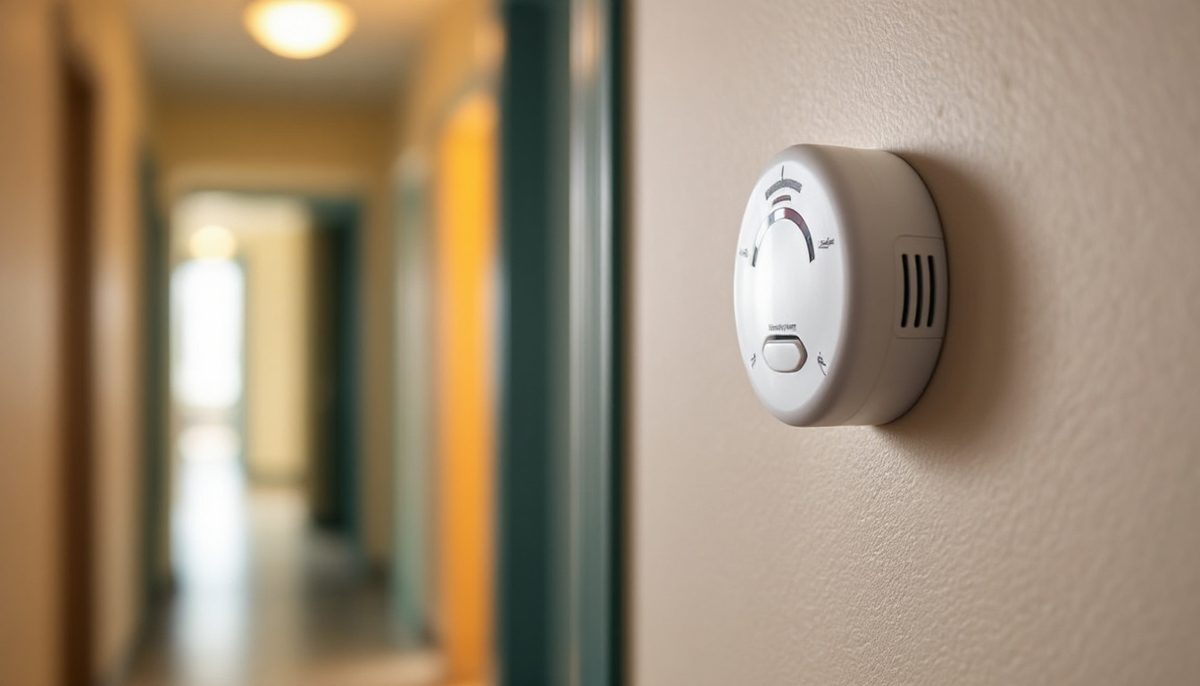
- A carbon monoxide alarm that sounds while the furnace runs, or a detector whose reading climbs whenever the heat comes on.
- Soot around the burners or at the base of the flue pipe, a sign that combustion is going wrong somewhere.
- Burner flames that turn yellow or start to dance the moment the blower kicks on, where a healthy one stays steady and blue.
- A sharp, chemical smell, a bit like formaldehyde, at start-up.
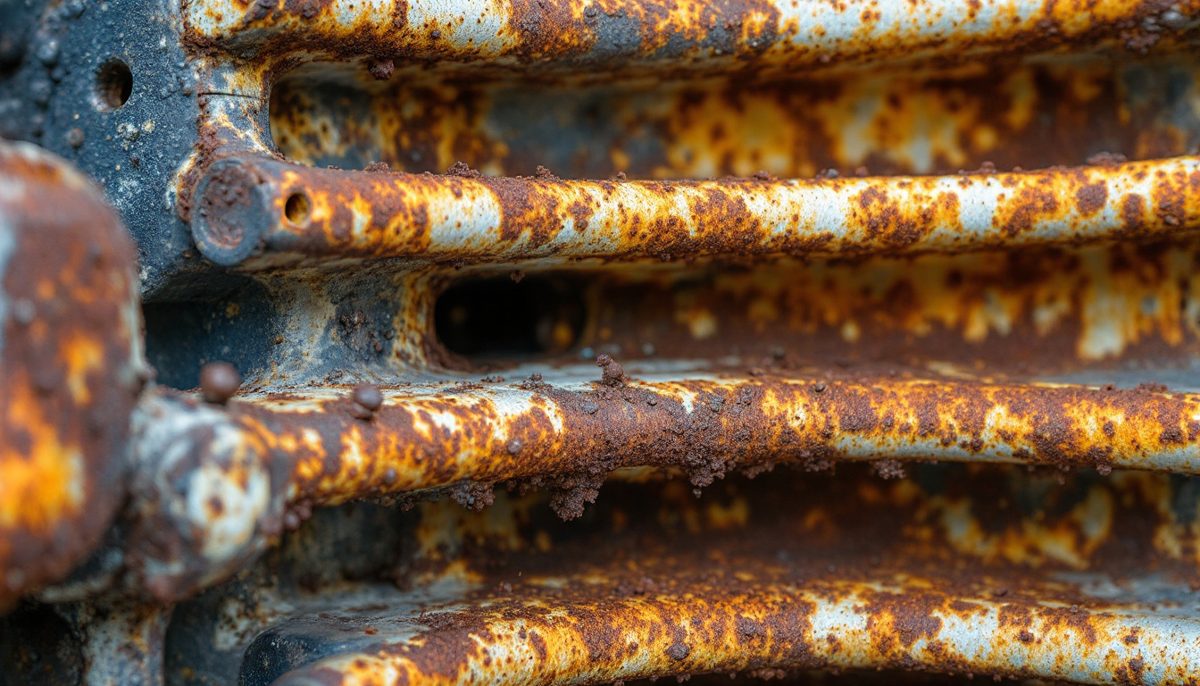
- Rust flakes on the burners, or corrosion you can see on the exchanger.
- Short cycling, or a high-limit switch that keeps tripping, because overheating and cracking tend to travel together.
- Headaches or nausea that ease when people leave the house and come back when they return.
Only the alarm is a safety emergency by itself, and the rest are reasons to book an inspection rather than guess. Our post on whether an old furnace can cause carbon monoxide goes further into that risk.
What to Do If You Suspect a Cracked Heat Exchanger
If the carbon monoxide detector is sounding, get everyone out of the house, pets included, and call 911 from outside. For anything short of an alarm, turn the furnace off at the thermostat and at the service switch, then book an inspection rather than keep the heat running in the meantime.
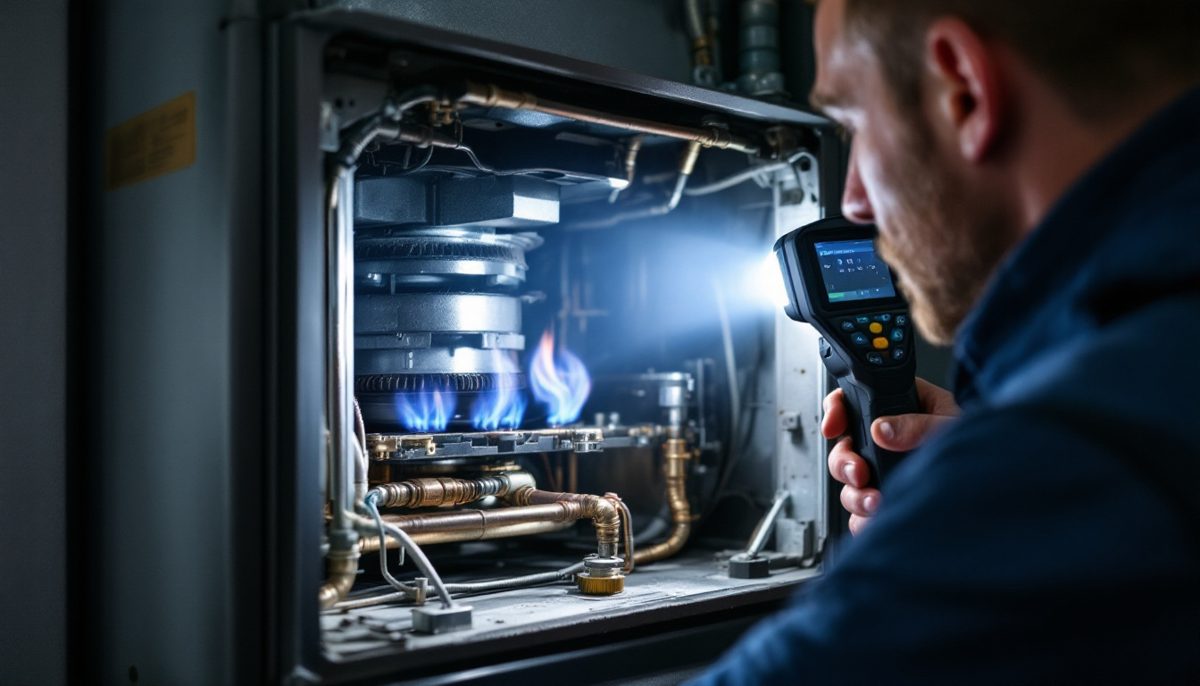
On site, the technician runs a combustion analysis to read carbon monoxide in the flue and at the supply registers, watches the burners as the blower starts, and feeds a camera into the heat exchanger, since most cracks sit where a flashlight can’t reach, and you should ask to see the photo or video. When the crack turns out to be real, expect the technician to tag the furnace as unsafe and shut off its gas until the part or the unit gets replaced. Plan for a couple of electric space heaters if it’s cold, and to book an inspection, call Calgary Air Heating and Cooling Ltd at (403) 720-0003.
How Much Does It Cost to Replace a Heat Exchanger?
Replacing a heat exchanger in Calgary usually costs $1,500 to $3,500, and more on some high-efficiency models. The diagnostic visit is $149, or $289 for evening and weekend calls during the heating season. Four things move the cost:
- The model, since some heat exchangers slide out easily and others mean stripping most of the cabinet.
- Whether the part is still under warranty.
- Labour, which is the bulk of the bill, since the unit comes apart down to the frame and takes most of a working day to rebuild.
- Part availability, since heat exchangers are model-specific and often have to come from the manufacturer while the furnace stays off.
That lead time weighs more here than in milder cities, and in a Calgary January the wait alone is one reason some homeowners choose a new unit instead.
Is Replacing a Heat Exchanger Worth It, or Is It Time for a New Furnace?
Replacing just the heat exchanger makes sense on a younger furnace in good shape, and seldom on an old one. If you don’t know the age, finding out how old your furnace is usually takes a minute with the serial number. Our rough guide:
| Furnace age | Heat exchanger under warranty? | What we usually suggest |
|---|---|---|
| Under 10 years | Yes | Replace the heat exchanger, since you mostly pay for labour |
| Under 10 years | No | Usually still the heat exchanger, if the rest checks out |
| 10 to 15 years | Either | Get both prices and weigh the other components |
| Over 15 years | Sometimes, but not the labour | Replace the entire furnace |
Past 15 years, the reasoning is plain arithmetic. A $1,500 to $3,500 repair puts a new part inside a furnace whose blower motor, inducer motor and control board are all the same age as the one that just failed, while a new furnace runs $5,000 to $8,000 installed with a 10-year parts warranty once registered. Our breakdown of how much a new furnace will cost explains that figure, and our furnace replacement service covers what the swap involves. An older mid-efficiency unit also wastes a share of its gas next to a 95% model, and that energy gap adds up over a long Calgary heating season.
At the other end, a seven-year-old furnace with a warrantied heat exchanger is worth keeping, and we would tell you so. If you do go new, our furnace installation service sizes the replacement to the house so it doesn’t short cycle its way toward the same crack.
How Long Does a Furnace Heat Exchanger Last?
A furnace heat exchanger usually lasts as long as the furnace around it, which for a gas furnace in Calgary means about 15 to 20 years with regular maintenance. An early failure, under ten years, nearly always has a cause behind it, usually airflow or sizing. On condensing furnaces, corrosion in the secondary heat exchanger matters as much as heat stress. Our guide on how long a furnace lasts covers the lifespan of the rest of the equipment.
What Cracks a Heat Exchanger, and How to Push That Day Back
Almost every crack traces back to heat stress, and most heat stress traces back to airflow. Years of heating and cooling fatigue the steel, which is normal ageing. Anything that makes it run hotter than designed speeds that up: a clogged filter, blocked registers, undersized return ducts, or an oversized furnace running in short, sharp bursts. Rust finishes the job where condensate sits in a heat exchanger that never gets warm enough to dry out.
Calgary adds its own strain on top. A long cold snap keeps a furnace running hard for days, and a chinook can swing the load from full output to barely running inside an afternoon, which piles on extra cycles. You can’t control the weather, but you can control airflow. Change the filter every one to three months through the heating season, keep registers and the return grille clear of furniture, and book a yearly tune-up. Our furnace maintenance service includes a look at the heat exchanger, and a problem caught on a scheduled call in October is far easier to deal with than one found on a January night.
Frequently Asked Questions
Can I run my furnace with a cracked heat exchanger?
No. Even when the carbon monoxide readings look normal on the day, the opening tends to grow under heat, and the furnace can start letting combustion gases into the supply air. Leave it off until the heat exchanger or the furnace gets replaced.
Does a cracked heat exchanger always leak carbon monoxide?
Not always, and not all the time. A small split may only open once the steel is hot, and the draft inducer in a modern furnace tends to pull air in rather than push gases out, so a clean reading on the day doesn’t clear a confirmed crack.
Does the warranty cover a heat exchanger replacement?
Usually the part, rarely the labour. Heat exchanger warranties commonly run 20 years or a limited lifetime on registered units, but installation labour warranties are much shorter. Ours is one year on a new installation, with an optional 10-year labour warranty when the furnace gets annual maintenance through us, so a claim in year twelve still leaves you paying the cost of most of a day’s work. Our guide to how long furnace warranties last goes through the parts and labour terms in more detail.
Can a technician be wrong about a cracked heat exchanger?
Yes, and this particular call has a reputation in the trade for being oversold. A discoloured seam, a factory crimp or surface rust can look like a crack in a poor photo. Ask for clear evidence, either a crack you can follow on camera or a carbon monoxide reading that points to one, and get a second opinion from another licensed HVAC company before paying for a replacement. At Calgary Air Heating and Cooling Ltd, we show you what we found and leave the call with you.