



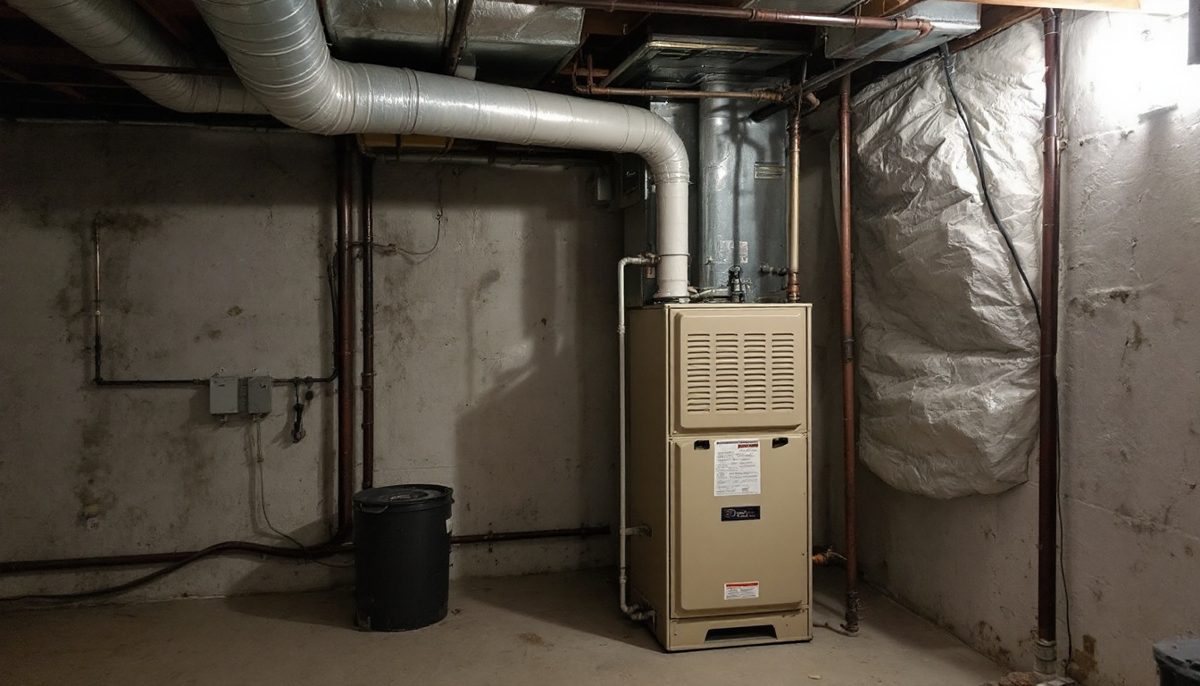
How to Tell How Old Your Furnace Is
The serial number has the answer. Every furnace made in the last several decades carries a manufacture date coded into that number, and once it is read correctly, guessing is over. No serial number visible, no manual, no idea who installed it: there are still ways to pin down an age, just slower ones.
Find the Serial Number First
Power the furnace off before opening anything. Then look for a small door or removable panel on the front of the cabinet. Behind it, on the inside wall of the unit, sits a metal rating plate or a printed sticker listing the model number, serial number, and sometimes a manufacture date spelled out in plain text.
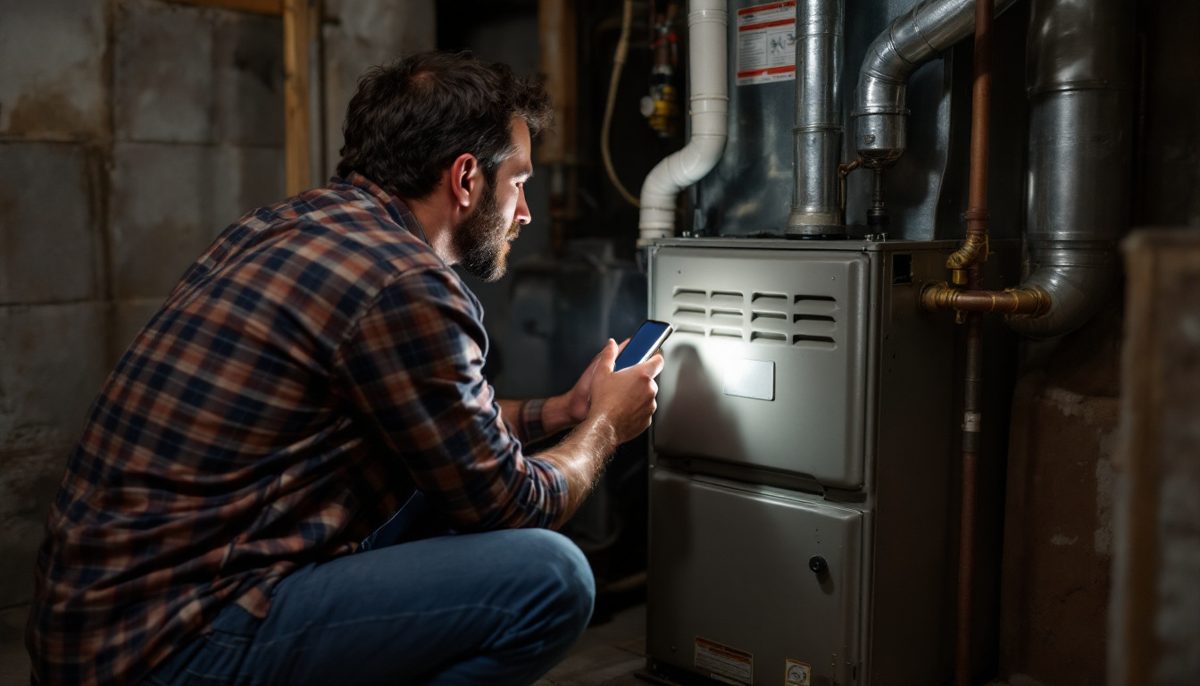
No luck there, check the exterior of the cabinet next, particularly along the side or back panel. Older units sometimes skip the sticker entirely and stamp a number directly into a metal part instead, the gas valve, a blower access panel, or the fan housing itself. Faded and hard to read is common on anything installed before the 2000s. A flashlight and a phone camera zoomed in on the number usually reads better than the naked eye does.
Decoding It, Brand by Brand
Every manufacturer runs its own numbering scheme, and reading a Lennox serial number using Carrier’s rules gets the wrong year every time. Calgary’s furnace market runs mostly Carrier, Bryant, Payne, Lennox, and Trane, plus older Ducane and Nordyne-family units still hanging on in a fair number of basements.
Carrier, Bryant, and Payne
These three share a parent company and a numbering convention. The first four digits of the serial number are the week and year of manufacture, in that order. A serial number starting with 0518 points to week 5 of 2018. Simple once known, and a pattern you will find in a lot of Calgary basements.
Lennox
Lennox serial numbers typically open with four digits followed by a letter. The first two digits identify the factory that built the unit, not the date, which is where a lot of people misread the number. Year of manufacture comes next, in the second pair of digits. A serial number reading 1218B12345 means the unit came off the line in 2018, the leading 12 is a factory code, not part of the date at all.
Ducane and the Nordyne Family
Ducane, Miller, and Intertherm are the same manufacturer under different badges, a detail that trips people up when a furnace nameplate says one brand and a parts search turns up another. Dating these follows the same first-four-digits pattern as most other brands, though the exact digit split varies enough by production era that a quick search for the specific model number alongside the serial is worth doing before assuming.
Anything Else
Trane, Goodman, York, and most other brands sold in Calgary lean on the same general rule: the first four characters of the serial number usually encode the week and year, sometimes with a letter standing in for the month instead of a number. Search the brand name plus “serial number decoder” and a match turns up fast. Still stuck, the manufacturer’s own support line can date a unit from a photo of the plate in most cases.
No Serial Number? Other Ways to Pin Down the Age
Sometimes the tag is gone, painted over, or too corroded to read. A few fallbacks still work. Installation paperwork or a manual, if either survived a move, usually lists a purchase or install date close to the manufacture date. A furnace warranty registration does the same, and most manufacturers can look one up by address if the homeowner’s name is on file.
HVAC technicians commonly leave a small sticker on the unit after every service call, dated and sometimes noting the install date too. Worth checking even on a furnace that looks untouched in years. And the last resort, a technician can often narrow the age down within a few years just from the model, the control board style, and how the unit was wired, without ever finding a clean serial number.
What Furnace Age Actually Tells You
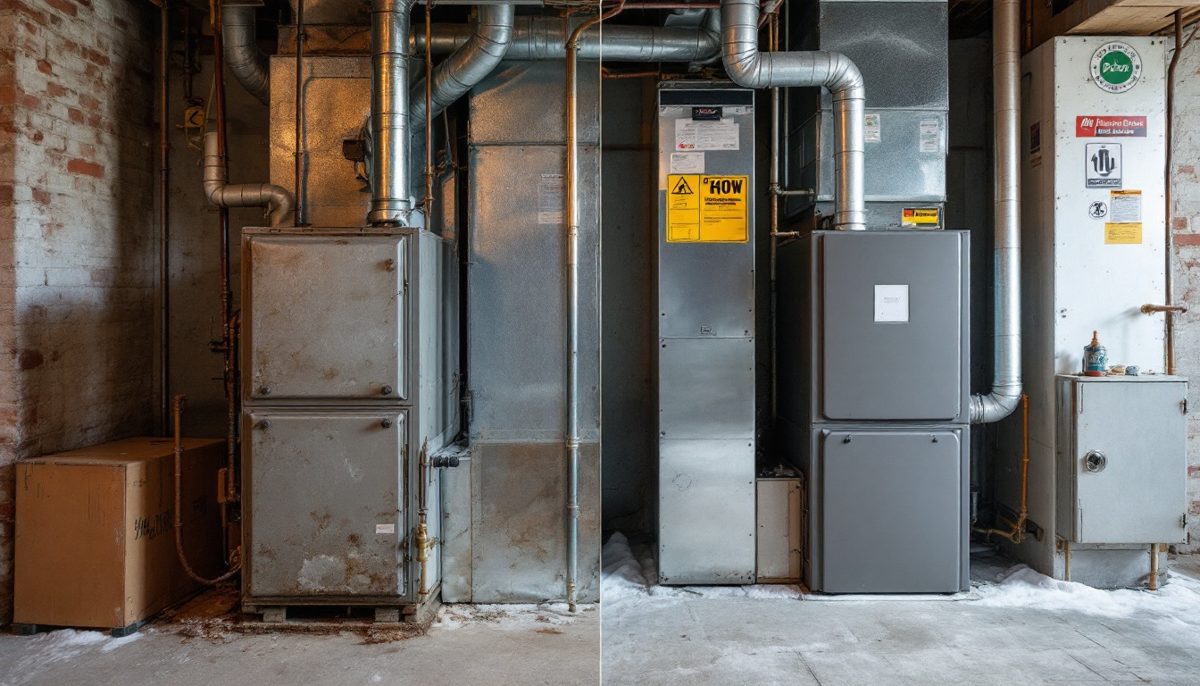
A furnace in its first seven or eight years rarely needs anything beyond routine maintenance, and a repair at that age is almost always worth doing. Somewhere past the ten to twelve year mark, the math starts changing. What a furnace repair costs against the age of the unit becomes the real question, not just whether the part is available. A common rule of thumb applies here: if a single repair runs close to what a chunk of a new system would cost, on a furnace already well into its expected life, replacement usually wins that comparison.
Fifteen to twenty years is the general service life most manufacturers design toward, and a furnace running past that window is not automatically dangerous, but it is carrying more risk with every additional winter. A cracked heat exchanger is the real concern on an older unit, since it is a carbon monoxide risk rather than just an efficiency one, which is why a working CO alarm belongs in any home with gas-fired equipment. Efficiency drops with age too. A furnace built in the 1990s or early 2000s commonly runs 56 to 78 percent efficient, against 95 percent or higher on a new furnace installation today, and that gap shows up directly on a winter gas bill.
House age is a useful gut check when the serial number search comes up empty entirely. A furnace matching the decade a Calgary subdivision went up, or the last major renovation on an older inner-city home, is a reasonable starting guess until something more exact turns up.
Frequently Asked Questions
Is a 10-year-old furnace considered old?
Not really. Ten years sits well inside the normal service life for most furnaces, and routine maintenance is the usual recommendation at this age, not replacement.
Is a 30-year-old furnace old?
Yes, well past the 15 to 20 year design life most manufacturers build toward. Still running does not mean still efficient or still safe, and a heat exchanger inspection is worth booking if one has not happened recently.
Is a 40-year-old furnace safe?
It can still be running, but safety is not guaranteed just because it starts every morning. A furnace this old should have its heat exchanger and venting checked by a technician, and a working carbon monoxide alarm nearby is not optional at this point.
Where can I find my furnace’s manufacture date if the label is gone?
Installation paperwork, a warranty registration lookup by address, or a past service sticker are the usual fallbacks. A technician can also estimate the age from the model and control board style during a routine visit.
Once the Age Is Known
An age on its own does not decide anything. What it does is turn a guess into an actual maintenance schedule, or a real conversation about furnace replacement instead of another repair. Calgary Air Heating and Cooling Ltd can confirm a serial number reading on a service visit, check the heat exchanger on anything approaching the 15 to 20 year mark, and lay out real numbers either way. Regular furnace maintenance is what keeps a younger unit young longer, and a furnace repair visit is the right call the moment something stops working right, whatever the age turns out to be.