




Can You Claim a New Furnace on Your Taxes in Canada?
Once the invoice arrives, a lot of Calgary homeowners ask the same thing: can you claim a new furnace on your taxes in Canada? For most households the answer is no. Heating equipment in the house you live in is a personal expense, so it does not lower your taxable income or earn a general tax credit. There are a few real exceptions, though, and since this is general information rather than tax advice, confirm your own situation with an accountant or the CRA.
Can You Claim a New Furnace on Your Taxes? The Short Answer
For a furnace that heats your own principal residence, the purchase usually earns nothing on your tax return. There is no general federal credit for replacing a heating system, and Alberta has no provincial home renovation tax credit either. The exceptions are narrow: a medical need, a rental property or business space, and a qualifying renovation that creates a secondary unit for a family member. If none of those fit, help comes from financing programs and rebates instead. So rather than putting off a furnace replacement until tax season, plan the job around the age and condition of your furnace and your budget.
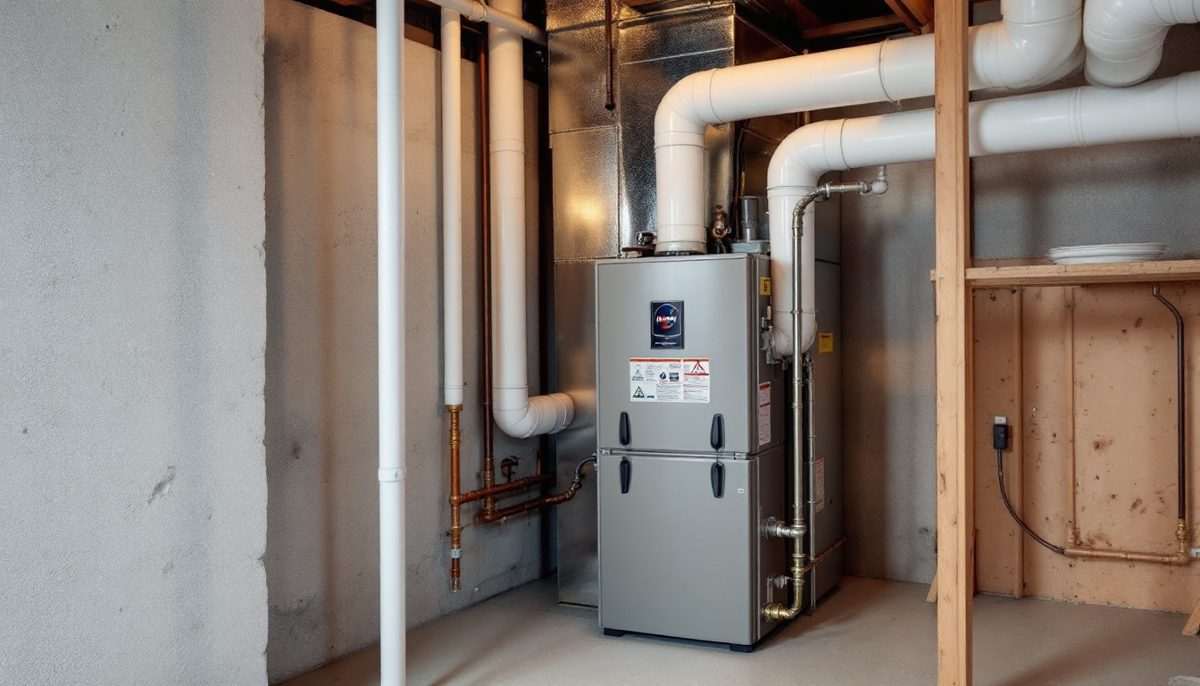
Can I Deduct the Cost of a New Furnace?
No, not for your own home. A deduction lowers your taxable income, and for a furnace, the Canada Revenue Agency only allows that where the spending is tied to earning income, such as running a business or renting out space. Your own heating system is treated like a new roof, as a personal expense.
Tax credits work differently, because they reduce the tax you owe. Credits exist for specific situations set out in the rules, and heating equipment is occasionally eligible under one. Before you dig through them, it helps to know the real cost of a new furnace, which typically runs about $5,000 to $8,000 installed in Calgary, depending on the model and the ductwork.
The Medical Expense Credit: Where a Furnace Can Count
This exception is easy to miss. Canada’s federal medical expense tax credit list includes an electric or sealed combustion furnace that replaces a furnace that is neither, where the replacement is necessary because of a severe chronic respiratory ailment or immune system disorder in a person you can claim for. You need a prescription from a medical practitioner, so it makes sense to have it before the work is done.
Sealed combustion equipment draws combustion air from outside through its own pipe, which many high-efficiency gas furnaces can do, while older units often pull air from the basement. If the replacement qualifies, the amount paid for the furnace can go into your medical expense claim.
The same CRA list includes two other items worth knowing about:
- An air conditioner, at $1,000 or 50 percent of the amount paid, whichever is less, for a person with a severe chronic ailment, with a prescription
- An air filter, cleaner or purifier used to cope with a severe chronic respiratory ailment or immune system disorder, also prescribed
Keep in mind that medical expenses only count above a threshold. On 2025 returns, you claim the amount above 3 percent of your net income or $2,834, whichever is less, and you can use any 12-month period that ends in the tax year. If a prescribed purifier is part of the plan, our filter system installation work covers whole-home filtration, though whether a given system qualifies depends on the prescription.
What Is the $7,500 Home Renovation Tax Credit?
The $7,500 figure refers to the multigenerational home renovation tax credit. As the CRA describes it, the credit applies when you build a self-contained secondary unit so that a senior aged 65 or older, or an adult who is eligible for the disability tax credit, can live with a related individual. An eligible individual can claim up to $50,000 in eligible expenses for one qualifying renovation, and because the credit is refundable, it pays out even when you owe no tax.
When the credit launched, the rate was 15 percent, which is where the $7,500 comes from. However, the credit follows the lowest federal tax rate, so the maximum on 2025 returns is $7,250 at 14.5 percent, and under current rules it falls to 14 percent, or $7,000, for 2026.
A furnace can be part of this claim. When the new suite needs its own heating, that furnace and its installation are directly attributable to the renovation, so they can count as a qualifying expense. Annual maintenance, routine repairs, household appliances and financing charges are not eligible.
Why the Home Accessibility Tax Credit Rarely Covers a Furnace
The home accessibility tax credit is open to anyone 65 or older by the end of the year or eligible for the disability tax credit, as well as certain relatives who support them, such as a spouse or common-law partner. It covers up to $20,000 a year in eligible expenses for a qualifying renovation to an eligible dwelling.
The catch is the purpose of the work. A qualifying renovation must help the qualifying individual get into the home or move around and function inside it, or it must reduce the risk of harm to that individual. Replacing heating equipment usually does neither, and the Canada Revenue Agency also excludes routine repairs, household appliances and work done mainly to maintain the value of the dwelling. A ramp or a walk-in shower renovation fits well; a furnace swap almost never does.
Rental Suites and Home Businesses: Furnace Tax Rules Change
Rental property is where a furnace becomes a genuine tax item. If you own a rental home in Calgary, a new furnace is generally treated as a capital expense, which means you claim it gradually through capital cost allowance rather than all at once. Repairs work differently: a replaced igniter or a service call on a tenant’s unit is usually a current expense in the year it happens. Our furnace repair service handles all major brands.
When you rent out a basement suite in the house you live in, you can claim the suite’s share of heating and upkeep. Claiming capital cost allowance on part of your own home can affect your principal residence exemption later, though, so talk to your accountant first. Self-employed people whose home workspace meets CRA’s conditions can also claim a share of utilities, including heat, though the equipment itself stays a capital item that most people leave out for the same reason.
What Home Improvements Are Tax Deductible in Canada?
For your own principal residence, almost no home improvements are tax deductible, and very few earn any tax relief at all. Instead, most help comes through credits and rebates tied to specific situations:
- Accessibility work for a senior or a person with a disability, through the home accessibility tax credit
- A secondary unit for a family member, through the multigenerational home renovation tax credit
- Medically required changes, including renovation expenses that give a person with a severe mobility impairment access to their home, through the medical expense credit
- A substantial renovation where 90 percent or more of the interior is removed or replaced, which can qualify for the GST/HST new housing rebate, subject to value limits and other conditions
General updates, such as a new furnace or a kitchen remodel in your own home, do not qualify on their own.

Rebates and Financing for a New Furnace in Calgary
Most homeowners get more value outside the tax system. The Canada Greener Homes Grant closed to new applicants in 2024, and the Greener Homes Loan stopped taking new applications on October 2, 2025. In their place, the Canada Greener Homes Affordability Program funds upgrades for low to median income households through provincial and local delivery partners, so check Natural Resources Canada to see what is running in Alberta.
One local option to look into is the City of Calgary’s Clean Energy Improvement Program. It finances approved upgrades, including an ENERGY STAR certified gas furnace that replaces less efficient equipment, and you repay the balance through your property tax bill. You have to apply, be approved and sign the agreement before the work starts. Residential intake is closed until winter 2026/2027, according to the City, so check its program page for the reopening date before you plan around it.
You can also ask Calgary Air Heating and Cooling Ltd about available financing options and current furnace rebates. We give free quotes on new installations, and our furnace installation service can confirm whether your chosen model carries the ENERGY STAR certification these programs ask for. Over the life of the unit, lower gas bills from a more efficient system can outweigh any rebate, as our piece on high-efficiency furnace installation and long-term cost savings explains.
What Is the Most Overlooked Tax Deduction in Canada?
The medical expense credit is a strong candidate, even though it is technically a credit rather than a deduction. People miss it because they assume their eligible spending falls below the threshold, or they forget that one spouse can claim the whole family’s expenses together.
Paperwork That Holds Up if the CRA Asks
Whatever eligible expense you claim, you do not send receipts with your tax return, but you do need to keep them for at least six years:
- The invoice, showing the contractor’s name, business address, amount and GST/HST registration number, if they have one
- A description of the work, the address where it was done and the date
- Proof of payment, such as a credit card slip or bank record
- The prescription, for any medical expense claim
Frequently Asked Questions
Can I claim furnace repairs on my taxes?
Only if the equipment heats a tenant’s unit or a business space, in which case repairs are usually a current expense for that year. For your own home, repairs and a yearly tune-up are personal spending, although regular furnace maintenance still pays off in fewer breakdowns.
Is there a tax credit for a heat pump in Alberta?
There is no personal tax credit for installing a heat pump in Alberta. Support comes through programs such as Calgary’s Clean Energy Improvement Program and, for eligible households, the Greener Homes Affordability Program.
Does a new furnace lower capital gains when I sell?
For most people, no, because the principal residence exemption already covers the gain on the home you live in. On a rental property, the equipment is handled through capital cost allowance, so ask your accountant how it applies to you.
Can I claim the GST on a new furnace?
No. Homeowners pay GST on a furnace like any other purchase, and the GST/HST new housing rebate only applies to new housing or substantial renovations, never to a furnace on its own.