



Should I Replace Furnace and AC at the Same Time?
Whether you should replace your furnace and AC at the same time comes down to two things: how old each unit is, and whether the new HVAC equipment will work properly with the old. If both are in the back half of their lifespan, or the new air conditioner needs parts the old furnace cannot supply, doing them together usually makes sense. When one of them is under about ten years old and running well, replacing only the one that failed is often the better call, and we will tell you so.
Should You Replace Your Furnace and AC at the Same Time? The Short Answer
Replace both at the same time when the furnace is past roughly fifteen years and the air conditioner is past twelve, because the second failure usually follows the first fairly quickly. That also applies to an upgrade to a two-stage or variable-speed air conditioner, since that kind of unit leans on a blower an older furnace may not have. On the other hand, a furnace that went in eight years ago has plenty of heating seasons left, so there is little reason to pull it out just because the AC quit in July. Most HVAC decisions land somewhere in between, which is why the rest of this page walks through the reasons on each side, starting with how closely the two depend on each other.
How Your Furnace and Air Conditioner Work Together
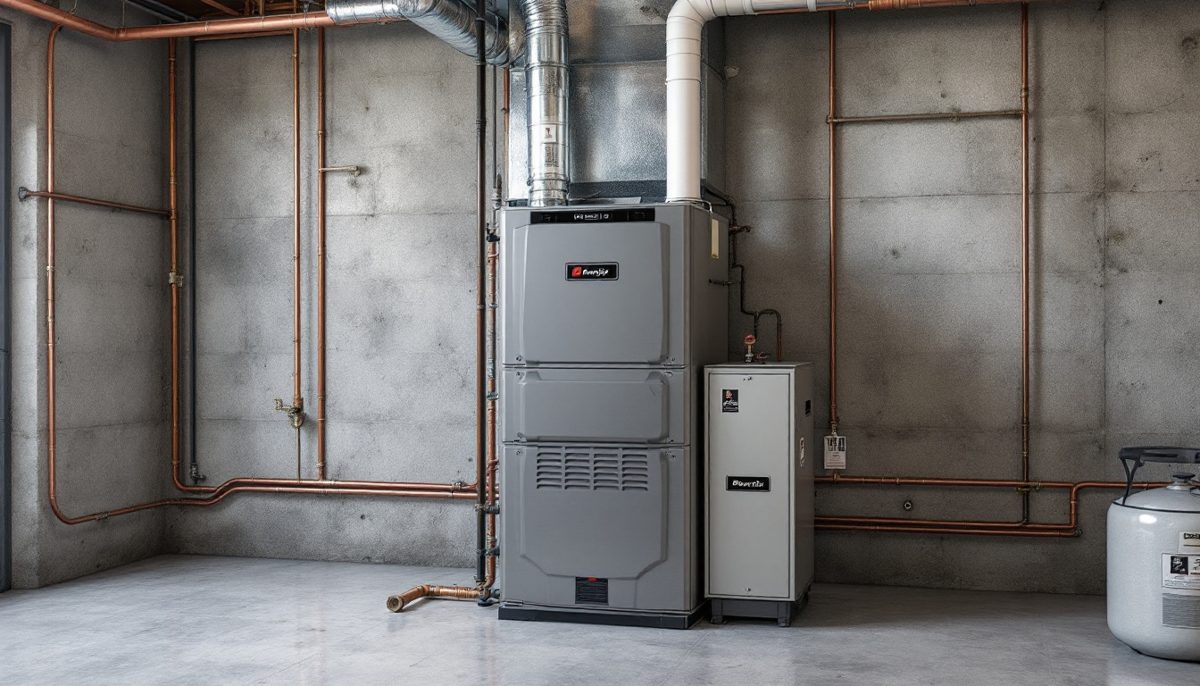
In most Calgary homes with central air, the furnace and the air conditioner are separate systems, but they work together as one HVAC system. The outdoor unit holds the compressor and condenser, while the evaporator coil that actually cools the air sits in a cabinet on top of the furnace. Every bit of that cool air travels through the house on the furnace blower, using the same ductwork and the same thermostat that run the heat in winter.
That arrangement works in one direction only. Your air conditioner needs the furnace to move its air, but the furnace does not need the air conditioner at all, so you can swap the furnace on its own with very little fuss. Replacing the AC by itself is where the questions start, because the new outdoor unit has to match the coil, and the coil has to fit the furnace cabinet and suit the airflow its blower can deliver. For a broader look at how cooling equipment fits into a house, our air conditioning services page covers the basics.
When Replacing Both at the Same Time Makes Sense
The clearest case is age. A gas furnace typically lasts fifteen to twenty years and a central air conditioner twelve to fifteen, so a furnace and AC put in together tend to reach the end within a few years of each other. If one has just died and the other is already that old, you will probably need to replace the second one soon, along with paying for a second installation visit and a second round of disruption.
Refrigerant is the second reason. R-22 was phased out in Canada in 2020, and during 2025 most manufacturers moved their new residential systems from R-410A to R-454B or R-32. A new outdoor unit on one of those refrigerants needs a matching coil, which means the installer opens up the cabinet on top of your furnace anyway. With that cabinet and plenum already open, adding a new furnace to the same job saves a good share of the labour compared with coming back for it later.
Third, a two-stage or variable-capacity air conditioner only delivers what you paid for when the blower can slow down and speed up with it. Many older furnaces have a PSC blower motor that runs at fixed speeds, so the upgraded AC ends up running like a basic one, with less of the comfort and energy savings you bought it for.
Warranty is the fourth. Manufacturers publish which outdoor units, coils and furnaces they approve to run together, and the AHRI directory lists matched combinations and their ratings. A mismatched setup can put manufacturer coverage on a repair at risk, whereas when you replace both units together, both warranties start on the same day. If your furnace is due and the AC is close behind, our furnace replacement service and AC replacement service can quote both as one job.
Finally, houses change. New windows, attic insulation or a finished basement all move the load, so equipment that was the right size in 2005 may be oversized for your home now. Replacing both lets the installer size the whole HVAC system against the house as it stands today, rather than copying two old nameplates.
When It Makes Sense to Replace Only One
Replacing only one unit is perfectly reasonable when the other is under ten years old and still does its job. That newer piece of equipment has plenty of useful life left, and removing it would throw away money you already spent. Regular HVAC tune-ups through our furnace maintenance service or AC maintenance service help protect that remaining life.
A new furnace alone can even help an older air conditioner. Modern furnaces commonly come with a variable-speed ECM blower, which moves air more evenly through the home, so upstairs rooms that used to run warm in summer can improve. The old AC keeps working, and its eventual replacement can match the new furnace.
Replacing only the AC also works when the existing furnace is compatible with the new outdoor unit and coil. That is more likely when you stay with a basic single-stage air conditioner and the heating equipment is still fairly young. If you plan to sell in the near future, putting in a whole new system rarely pays back in full, although buyers do notice a newer system. Whichever way you go, plan ahead, so that if you replace the furnace this year, you pick one that will pair properly with the AC you expect to buy later.

Is It Cheaper to Replace Furnace and AC at the Same Time?
Usually yes, although the upfront bill for both systems is larger. The savings come from doing the shared work once: one HVAC crew, one visit, one round of paperwork, one trip into the furnace cabinet, and one thermostat setup. When the two jobs happen years apart, some of that work simply gets done twice.
A new gas furnace installed by Calgary Air Heating and Cooling Ltd typically runs $5,000 to $8,000, depending on the model, the size and the installation. Our guide to how much a new furnace costs breaks that range down in more detail. The air conditioner price varies with the unit and the house, so the fair way to compare is to ask for three numbers: the furnace alone, the AC alone, and the complete system. Quotes on new installations are free and the pricing is transparent, so you can see exactly where the combined job saves money and where it does not.
If the combined cost is more than your budget allows at once, ask about financing options and any current rebates or incentives. Spreading the payment is often easier than spreading the work across two separate years. You can read more about each side of the job on our furnace installation service and AC installation service pages.
How Calgary's Climate Changes the Decision
A Calgary system spends many more hours heating than cooling. The heating season runs from fall well into spring, while the cooling season is closer to eight to ten weeks, so a twelve-year-old AC here has often run far fewer hours than one the same age in a warmer city. That does not make it immune to age, though, because the outdoor unit still sits through hail, chinooks and freeze-thaw cycles every year, and bent condenser fins after a hailstorm are common.
Timing matters here as well. A furnace that fails in a January cold snap gets replaced on short notice, which leaves little room to plan the air conditioner properly. If both units are getting old, booking the work in spring or early fall gives you time to compare options on your own schedule. When your AC is acting up but is not that old, our AC repair service can tell you whether a repair still makes sense before you commit to anything larger, and a younger furnace with a fault can usually go through furnace repair rather than replacement.
Frequently Asked Questions
What is the $5,000 rule for AC?
The $5,000 rule is a quick repair-or-replace test: multiply the age of the air conditioner by the cost of the repair in front of you. When the answer comes out over about $5,000, replacement is usually the better use of the money. It is a rough guide rather than a hard rule, because it ignores whether the failed part is the compressor and whether the furnace is due as well. Our guide to AC repair versus replacement covers the other signs worth weighing.
Should a 25-year-old furnace be replaced?
In most cases, yes. A 25-year-old furnace sits well past its expected lifespan, and many from that era are mid-efficiency models around 80 percent AFUE, while gas furnaces made for the Canadian market since July 2019 must meet 95 percent. Parts for older units are also harder to find, so a planned replacement on your schedule usually costs less than an emergency one in February.
Do I have to replace my furnace if I replace my AC unit?
No, not automatically. If the existing furnace is in good shape, less than about ten years old and compatible with the new air conditioner and coil, you can keep it. You would need to replace both when the furnace is old, when the new AC is a two-stage, variable-capacity or communicating model it cannot support, or when the manufacturer requires a matched system for the warranty.
Can a new AC be installed on an old furnace?
Yes, as long as the furnace blower can move the airflow the new unit needs and the coil fits the cabinet. Before you buy, a technician should check the blower, the cabinet width, the ductwork and how old the whole setup is. Pairing a new air conditioner with a furnace that has only a few winters left is the situation to avoid, because you would soon be opening up the same cabinet again.
If you are not sure where your equipment sits, Calgary Air Heating and Cooling Ltd offers no-obligation assessments across Calgary, Chestermere, Cochrane and Okotoks. We install Lennox, Tempstar, Goodman and Trane furnaces, and we will tell you plainly whether it makes sense to replace both systems or whether one unit still has years left in it. Call (403) 720-0003 to book a time, with evening and weekend appointments available.