



What Is the Labour Cost to Install a Furnace in Calgary?
In Calgary, the labour cost to install a furnace usually runs between $1,500 and $4,000 on top of the equipment, and a standard gas furnace job lands somewhere between $5,000 and $8,000 once the unit and the work are added together. Where your home falls in that band depends far more on what surrounds the old furnace than on the new box itself. Below, we break down what the labour portion pays for, how many hours the work takes, and which parts of a job push the installation cost up.
The Labour Cost to Install a Furnace, in Short
On a straightforward swap, where the new unit goes in the same spot, connects to sound ductwork and exhausts the same way as the old one, labour sits near the bottom of that $1,500 to $4,000 range. Once the crew has to reroute pipe, rework the plenum or move the unit, it climbs toward the top. HomeStars puts Canadian HVAC labour at roughly $75 to $150 an hour, although most contractors give you one written price for the whole job rather than billing the clock. For the full installed cost by fuel type and efficiency, our guide to how much a new furnace will cost covers the equipment side, so this page stays on the labour.
It helps to read any quote in two halves. On a furnace installation quote, the equipment is a fairly fixed cost set by brand, size and efficiency, while the labour reflects your particular house. Two neighbours buying the same model can see prices that differ by $1,000 or more, and nearly all of that gap sits in the work.
How Many Hours Does It Take to Install a Furnace?
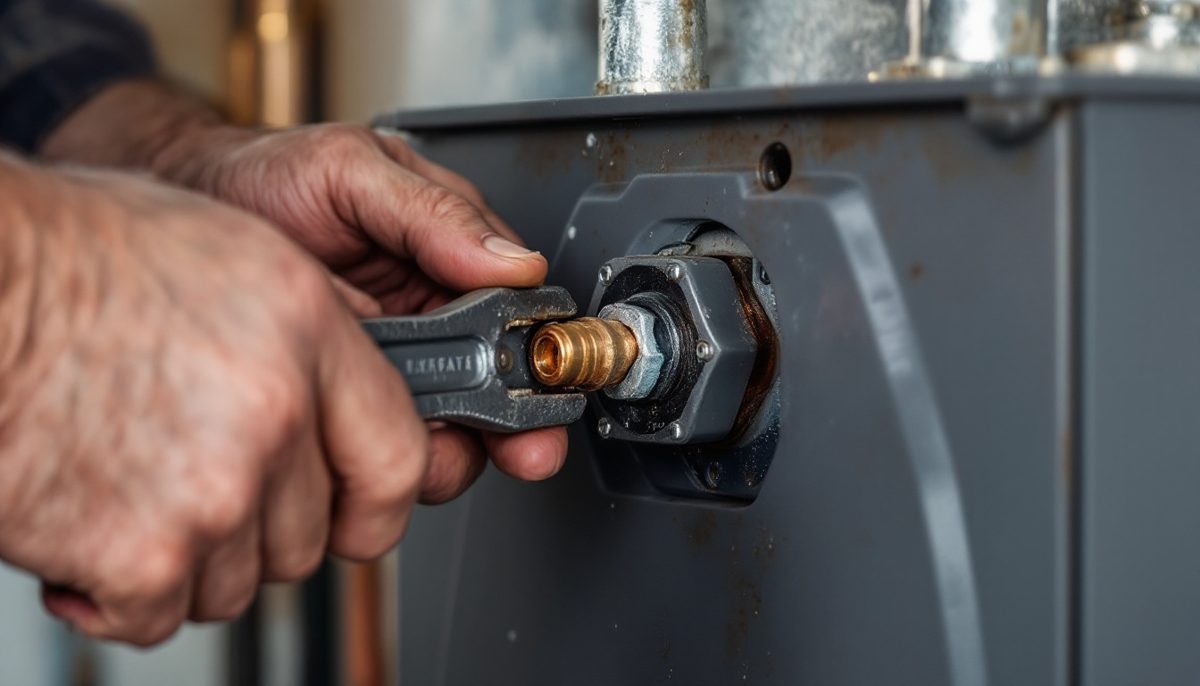
A like-for-like replacement usually takes 4 to 8 hours on site. That is the window our furnace installation service works to on a typical Calgary job, with weather, access and whatever turns up behind the old unit adding time. Some national guides quote 8 to 16 hours instead, which most likely counts person-hours, since two installers working a full day add up to about sixteen hours of labour. Converting an old chimney-vented furnace to a high-efficiency model, relocating the unit, or rebuilding a section of ductwork can stretch the work into a second day.
What the Labour Line on a Quote Actually Covers
The labour line pays for a lot more than carrying a furnace down the stairs. A complete furnace installation normally includes the following:
- Shutting off gas and power, then disconnecting and removing the old unit
- Setting and levelling the new furnace, then building the transition to the existing supply and return ducts
- Running PVC exhaust and intake pipe plus a condensate drain for a high-efficiency model
- Connecting the gas line and testing every fitting for leaks
- Wiring the power and thermostat connections
- Starting the system and checking gas pressure, temperature rise and airflow
- Pulling the permit, booking the inspection, hauling away the old equipment and cleaning up
Commissioning is the step people rarely see, although it matters a great deal. If nobody sets the furnace up against the manufacturer’s specifications, it can short cycle, overheat or waste energy for years. So when you compare prices, ask each contractor whether startup testing is included, since a cheaper number sometimes means that step gets skipped.
What Pushes the Labour Cost Up
Venting is a frequent reason a Calgary price climbs. Many older homes still have a mid-efficiency furnace sending exhaust up a masonry chimney, while a replacement natural gas furnace today is almost always a condensing, high-efficiency unit that exhausts through plastic pipe out a wall or the roof. That change, along with any gas line adjustments, typically adds $500 to $1,200. A water heater that used to share the chimney may also need a liner once the furnace stops sending warm exhaust up with it.
Ductwork is the next big factor. Existing ducts that are undersized, leaky or badly laid out can hold a new furnace back, and HomeStars puts duct modifications at $1,500 to $7,000 across Canada. Tight access raises the bill too, whether that means a unit squeezed under basement stairs, a finished ceiling that has to be opened, or a crawl space. Relocating the furnace, upgrading an electrical circuit and emergency work during a January cold snap all add cost as well. If a fairly young furnace has one failed part, our furnace repair service is usually the cheaper route, and our furnace replacement service covers that decision in more detail.
Calgary Rates Against Canadian and U.S. Averages
HomeStars puts Canadian labour for a standard installation at $1,000 to $3,500 and for a high-efficiency unit at $2,500 to $5,500. Home Depot Canada quotes a national range of $4,100 to $9,500 installed, with an average cost of $6,800 before tax for a high-efficiency gas furnace in a 1,500 square foot home, and its Alberta column runs $5,500 to $8,800.
American guides look lower, although their figures are in U.S. dollars. Angi lists a national average of $4,814 with labour at $75 to $100 an hour, while Homewyse starts its basic estimate near $3,300. Both are U.S. national averages that blend many milder regions, where electric and oil heating are more common, so they rarely match a job here.
For the average installation cost of a new furnace in Ontario, Home Depot Canada’s provincial pricing runs about $4,900 to $8,000 installed, before tax, for a high-efficiency gas furnace in a 1,500 square foot home. We only work in the Calgary area, so we cannot speak to that market beyond the published figures. Wherever you live, the number to trust is a written quote from a licensed local installer who has actually seen your house.
How Much Is a New Furnace for a 2,000 Square Foot Home in Canada?
In Calgary, most homes of that size can expect to pay the same $5,000 to $8,000 for a gas furnace installed, with two-stage and modulating models toward the top. The BTU size such a home needs varies more than people expect, often somewhere between 60,000 and 100,000 BTU depending on insulation, windows, age and layout. Our article on how many BTU your furnace needs explains how that gets worked out.
What surprises many homeowners is how little the labour changes with the size of the house. A bigger furnace weighs more and costs more, but the crew still does the same disconnection, venting, gas, wiring and startup work. So a modest bungalow with a cramped mechanical room can take longer to install in than a large two-storey with an open, easy-to-reach basement.
Why a Furnace Is Not a Do-It-Yourself Job in Calgary
Saving the labour by doing it yourself is not a realistic option here. The City of Calgary issues furnace replacement permits to qualified HVAC contractors, covering the appliance and its venting, while gas line work needs a gas permit issued to a qualified gas fitter. Homeowners face limits on what they can take on under their own permits, so check with the City before planning any of this work yourself.
Warranty is the other reason. Manufacturers generally require professional installation to honour their coverage, so a self-installed unit can leave you paying for a failed heat exchanger or control board yourself. The permit and inspection also protect you when you sell the house or file an insurance claim, because an unpermitted appliance can raise questions from a buyer or insurer.
Ways to Keep Furnace Installation Labour Down
You can lower the labour cost without cutting corners. Book in spring or early fall when you can, since contractors are busiest during cold snaps, and shoulder-season work sometimes comes with a slightly lower labour charge or at least more flexible scheduling. Replacing an aging furnace before it fails also helps your budget, because an emergency install in January leaves no time to compare prices.
If your air conditioner is near the end of its life too, ask about doing both at once, and our article on replacing the furnace and AC at the same time covers when that pays off. You can book our AC installation service alongside a new furnace, which saves a second visit and lets the crew match the coil to the furnace in one go. Keeping up with yearly furnace maintenance helps as well, since a technician who already knows your system can flag duct or exhaust issues long before replacement day.
Finally, ask for an itemized quote. Calgary Air Heating and Cooling Ltd offers free, no-obligation quotes on new installations, with transparent pricing and no hidden fees, so you can see exactly what the labour covers before you agree to anything. Financing is available on request, and evening and weekend appointments make the visit easier to fit around work.
Frequently Asked Questions
What is the labour cost to install a furnace in Calgary?
In Calgary, Chestermere, Cochrane and Okotoks, labour on a typical gas furnace replacement usually runs $1,500 to $4,000. A simple swap sits at the lower end, while an exhaust conversion or duct changes push it higher.
Does the quote include the gas permit?
Usually, yes. The permit and inspection are usually built into the furnace installation price, and commonly quoted permit fees run in the low hundreds of dollars, so ask if you do not see them listed.
Is the installation work covered by a warranty?
Yes. Our new furnace installations include a 1-year labour warranty, and an optional 10-year labour warranty is available when the furnace gets its annual maintenance with us, which also transfers if you sell the house. The furnace itself carries a 10-year parts warranty once you register it, and that coverage depends on a licensed installation. Our guide to how long furnace warranties last explains how the parts and labour terms work together.
Can I buy my own furnace and pay only for labour?
Some contractors will quote labour only, although many will not, because they cannot stand behind equipment they did not supply or size. You also risk buying the wrong size, and any savings on the box can disappear once the pipe or duct transition has to be adapted to fit it.